
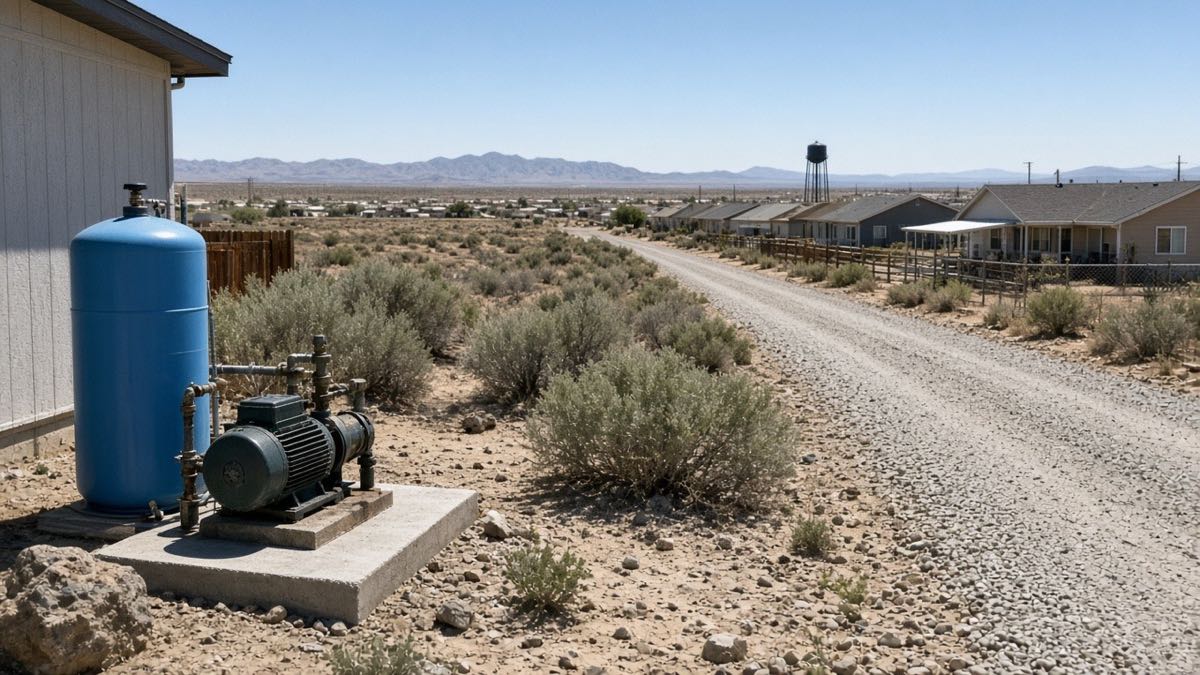
Fernley drinks groundwater. In 2009 the city opened a water treatment plant on Silver Lace Boulevard to take arsenic out of that groundwater so the municipal tap could meet the EPA’s 10 ppb limit. The plant uses coagulation, flocculation, sedimentation, and microfiltration. City copy on the facility says untreated city wells averaged about 50 parts per billion before that plant; treated water is held to 10 ppb or less. The plant currently treats groundwater. The city notes it could be expanded to treat surface water later — that is not how Fernley drinks today.
That story is the city’s. It is not the story of a private well on the edge of town, a canal-side lot, or a house that never connected. Those wells do not pass through Silver Lace. They do not show up on the Consumer Confidence Report. They are unregulated domestic supplies, same as any other Northern Nevada well.
Private wells we test here
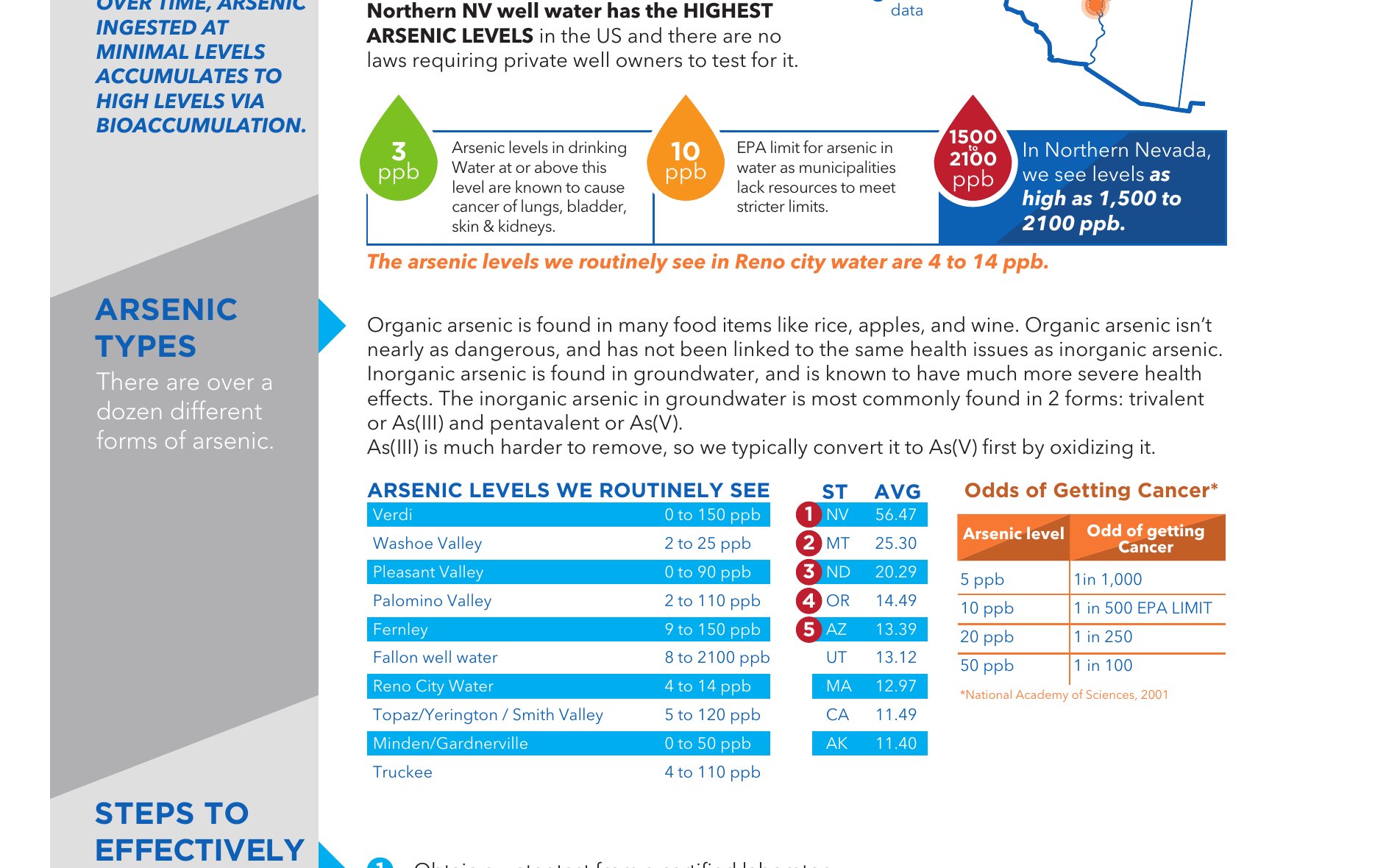
On private wells around Fernley, the range we publish is 9 to 150 ppb. That band is from our infographic of wells we see. It is not the city CCR, and it is not the 50 ppb raw-water average the treatment plant was built to knock down. A Fernley address on city water and a Fernley address on a well are two different waters.
If you are on city water, ask for the latest CCR and NDEP Drinking Water Watch records for Fernley. If you are on a well, those documents do not describe your tap.
The house on the next canal
Fernley grew fast enough that city main and a domestic well can sit on the same street. Neighbors compare taste, hardness, and “we already had the city test.” Taste will not tell you arsenic. A city CCR will not tell you a well. The lot that connected in 2012 and the lot that kept its well are not the same sample, even if the mailboxes share a route.
The short science
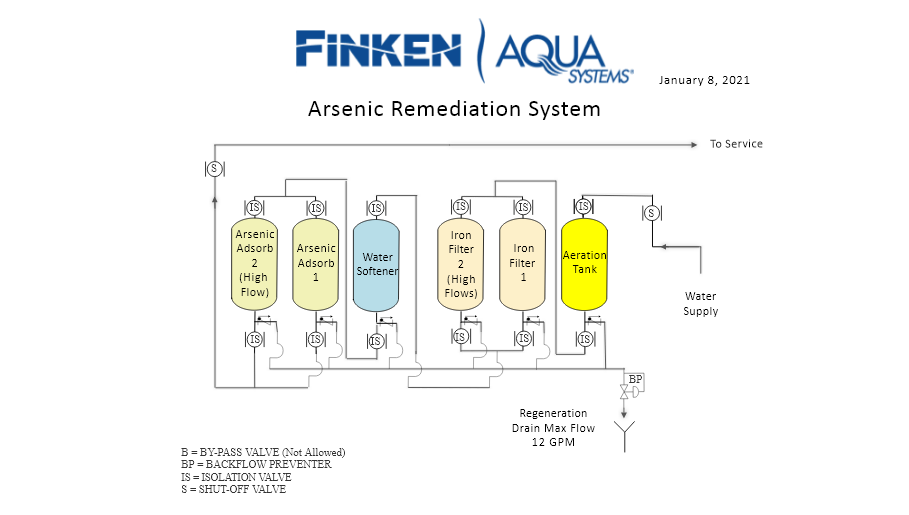
EPA’s limit is 10 ppb. DRI’s 2022 Healthy Nevada Project kits — 174 private wells, mostly Northern Nevada — found 22% over that line. Forty-one percent of those homes already had some treatment, and some treated samples still exceeded 10 ppb. Pure Water’s own call-outs test over the limit 58% of the time. Different sample, different percentage; we keep them labeled. Arsenic in groundwater is usually As(III) or As(V). Type III needs oxidation. Iron fouls arsenic media, which is why a single tank guessed from a neighbor’s Fernley install often fails. Full staging is on arsenic-awareness.
City customers and well owners
“Arsenic treatment is not one-size-fits-all. It must be properly tested, designed, and installed to perform correctly.”
Bryce Pollock, managing partner
On city water: you are drinking treated groundwater. Keep an eye on the CCR. A whole-house softener or drinking-water RO can still be a household choice for hardness or taste; it is not a substitute for knowing whether you are even on the municipal system. On a well: test arsenic at a certified lab, including type if we are designing treatment. We work Fernley from the Reno shop. We do not treat a city tap as if it were a well, and we do not treat a well as if Silver Lace already cleaned it.
Get a free certified lab arsenic test
If your Fernley home is on a private well — or you are not sure which side of the meter you are on — get a certified lab arsenic test. October is Arsenic Awareness Month. Call (775) 324-2001 or request a free certified lab arsenic test.
Pure Water Systems of NV. 245 Vine St, Reno, NV 89503. NV Lic #94724. CA Lic #1054103.