
The following is a research summary from the Desert Research Institute. We’re republishing it because the findings speak directly to well owners across our service area: Palomino Valley, Washoe Valley, Fallon, Carson City, and the rural communities around Reno where private wells are the norm.
Study Shows Many Household Wells Need Better Treatment and Monitoring
Outside of Nevada’s cities, private wells are the primary source of drinking water, serving 182,000 people. Yet some tested private wells in Nevada are contaminated with levels of heavy metals exceeding federal, state, or health-based guidelines, according to a study published in Science of The Total Environment. Consuming water contaminated by metals such as arsenic can cause adverse health effects.
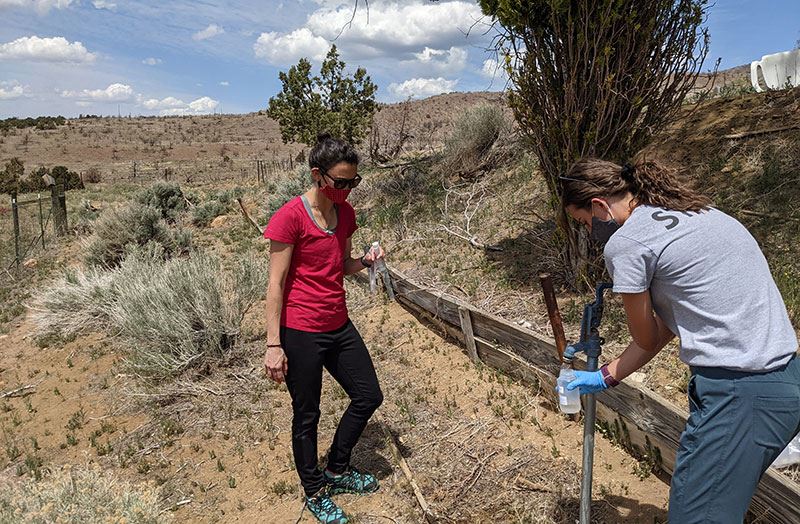
Scientists from DRI and the University of Hawaii Cancer Center recruited households with private wells through the Healthy Nevada Project. Households were sent free water testing kits and notified of their results along with recommended actions. More than 170 households participated, the majority from Northern Nevada around Reno, Carson City, and Fallon.
“The goals of the Healthy Nevada Project are to understand how genetics, environment, social factors and healthcare interact. We directly engaged our participants to better understand environmental contaminants that may cause adverse health outcomes,” said co-author Joseph Grzymski, Ph.D., research professor at DRI and principal investigator of the Healthy Nevada Project.
Nearly one-quarter (22%) of the private wells sampled had arsenic exceeding EPA limits, with levels 80 times higher than the limit in some cases. Elevated levels of uranium, lead, cadmium, and iron were also found.
“We know from previous research that Nevada’s arid climate and geologic landscape produce these heavy metals in our groundwater,” said Monica Arienzo, Ph.D., associate research professor at DRI, who led the study. “It was important for us to reach out to community members with private wells to see how this is impacting the safety of their drinking water.”
Fewer than half (41%) of the wells sampled used water treatment systems, and some treated samples still contained arsenic over EPA guidelines. Although average contaminant levels were lower in treated water, many homes were unable to reduce them to levels considered safe.
The state leaves private well owners responsible for monitoring their own water quality. The study shows more frequent testing is needed to ensure Nevada’s rural communities have safe drinking water, particularly as climate change and population growth alter groundwater chemistry and potentially increase metal concentrations.
“The results emphasize the importance of regular water quality monitoring and treatment systems,” said co-author Daniel Saftner, M.S., assistant research scientist at DRI.
Although the research focused on Nevada wells, other arid communities across the Western states face similar risks.
Source: Desert Research Institute. Study: Arienzo et al., “Naturally occurring metals in unregulated domestic wells in Nevada, USA,” Science of The Total Environment, 2022.
What This Means If You’re on a Well Here
One detail in the findings deserves emphasis: 41% of the sampled wells already had treatment systems, and some of those still tested over EPA guidelines. Having a system installed is not the same as having the right system, correctly sized, for what is actually in your water.
If you’re on a private well in Northern Nevada, book a free water test and find out where you actually stand.
October is Arsenic Awareness Month
Northern Nevada private-well owners can request a free certified laboratory arsenic test. Get a free arsenic test or call (775) 324-2001.