
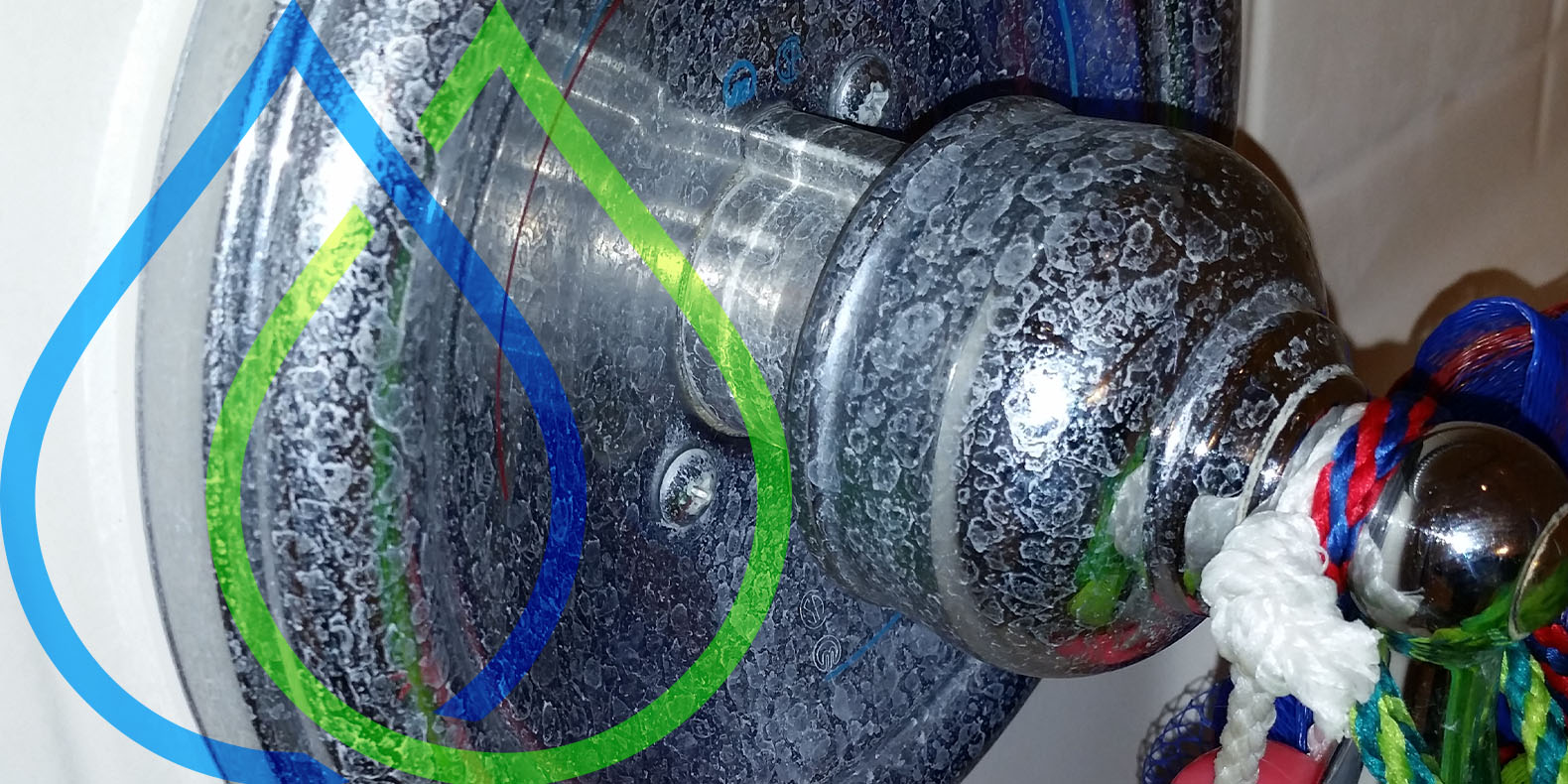
Hard water may seem harmless, but it causes extensive damage over time. The minerals that make water hard, mainly calcium and magnesium, produce scale buildup and corrosion in appliances, reducing both efficiency and lifespan. Hard water also voids most appliance warranties.
What Is Hard Water?
Hard water contains high levels of dissolved minerals picked up as water passes through rock and soil on its way to your plumbing.
- Calcium: the most common hardness mineral. Makes soap less effective and leaves a white, chalky residue.
- Magnesium: the other main hardness mineral. Causes scaling in pipes and appliances and makes soap harder to lather.
- Iron: leaves reddish-brown staining on surfaces and clothing, and a metallic taste.
- Manganese: similar to iron, but produces brownish-black staining.
Two others often show up on a water test but are worth separating out, because they aren’t hardness minerals at all, they typically come from the plumbing rather than the source water:
- Copper: affects taste, and at high levels is a health concern. Often leached from copper pipe, particularly where pH is low.
- Lead: a serious health hazard at elevated levels, and it comes from old pipes and fixtures rather than the aquifer.
Hardness is measured in parts per million or grains per gallon, and ranges from slightly hard to very hard depending on the source.
Signs You Have Hard Water
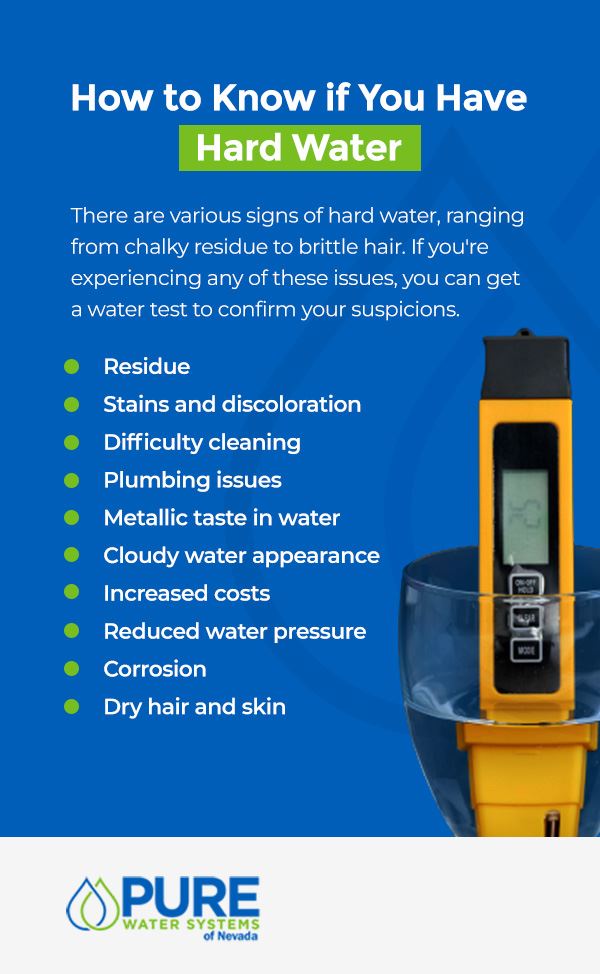
- Residue: white or chalky deposits on faucets, showerheads, and fixtures, or a film on the water surface where soap reacts with minerals.
- Stains and discoloration on clothes, dishes, and appliances.
- Difficulty cleaning: soap won’t lather, and residue takes real effort to remove.
- Reduced water pressure as scale slowly restricts flow inside the pipes. In severe cases flow can be cut off entirely.
- Metallic taste or odor, which also carries into coffee and tea.
- Cloudy pool or hot tub water where sanitising chemicals react with the minerals.
- Rising utility bills, because scaled equipment takes longer to heat water.
- Corrosion: dissolved minerals reacting with metal plumbing, which weakens pipes and can discolour the water with rust particles.
- Dry hair and skin, as minerals strip natural oils and leave residue behind.
Hard Water in Northern Nevada
If you live in Northern Nevada, chances are you have hard water. The reason is geological: the region is rich in mineral deposits, and water picks those minerals up as it moves through rock and soil.
The Truckee River is one of Reno’s primary drinking water sources. That river water is blended with over 100 public wells, which produce extremely hard water and high levels of arsenic.
Hardness varies even within the same town, so the only way to know your number is to have the water tested.
Washing Machines
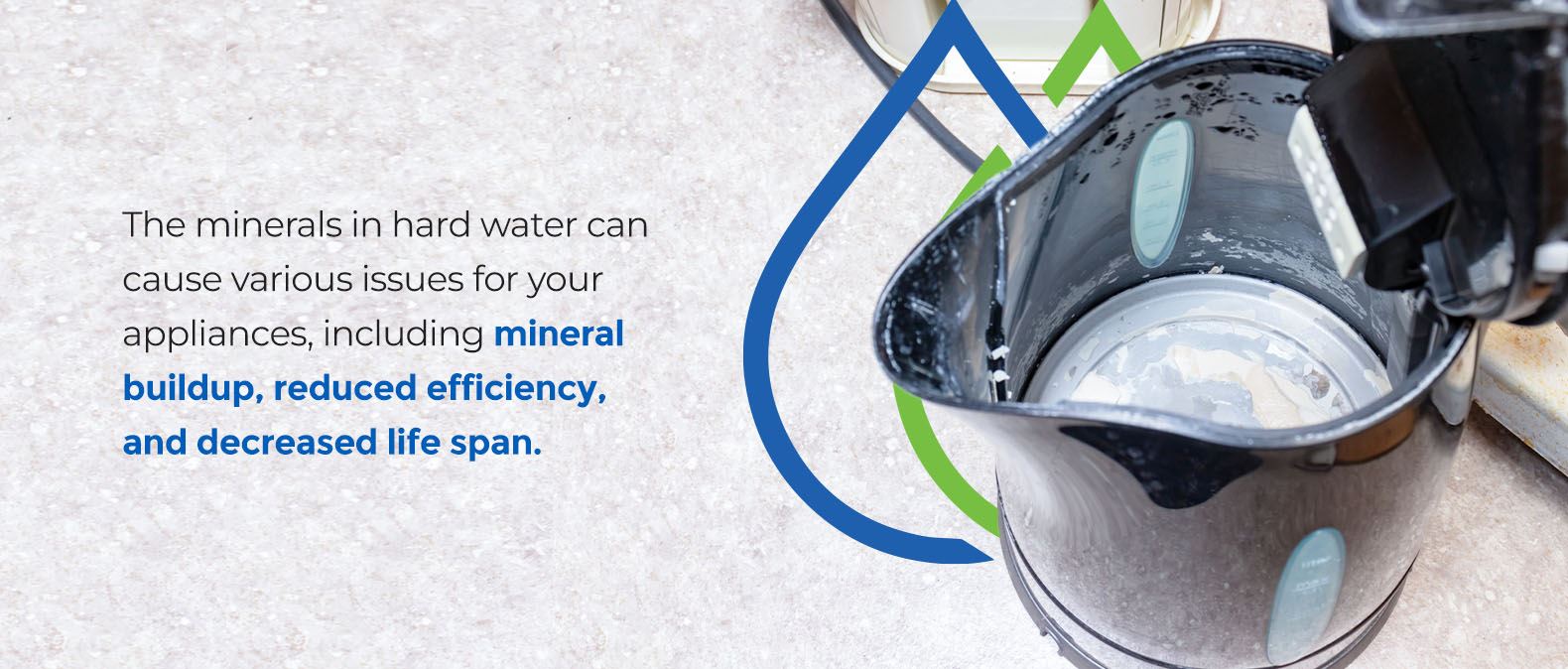
Mineral buildup damages the heating element, reducing efficiency and raising energy bills. Scale also makes it harder to get clothes clean, leaving them dingy and gray. Clogging is the other risk, blockages back water up in the machine, which can cause leaks and flooding.
Dishwashers
Hard water gradually clogs the narrow openings in the spray arms, so water can’t reach all the dishes and cleaning performance drops.
You also get white spots and streaks on dishes and glassware from mineral deposits, and the detergent itself becomes less effective as minerals bind with it, so you end up using more.
Water Heaters
Minerals accumulate at the bottom of the tank as sediment. As that layer thickens it insulates the burner from the water, reducing efficiency and raising bills. It also causes the popping and cracking noises people notice as the unit heats.
Mineral deposits corrode and damage the heating element too, shortening lifespan and eventually causing leaks.
Solutions
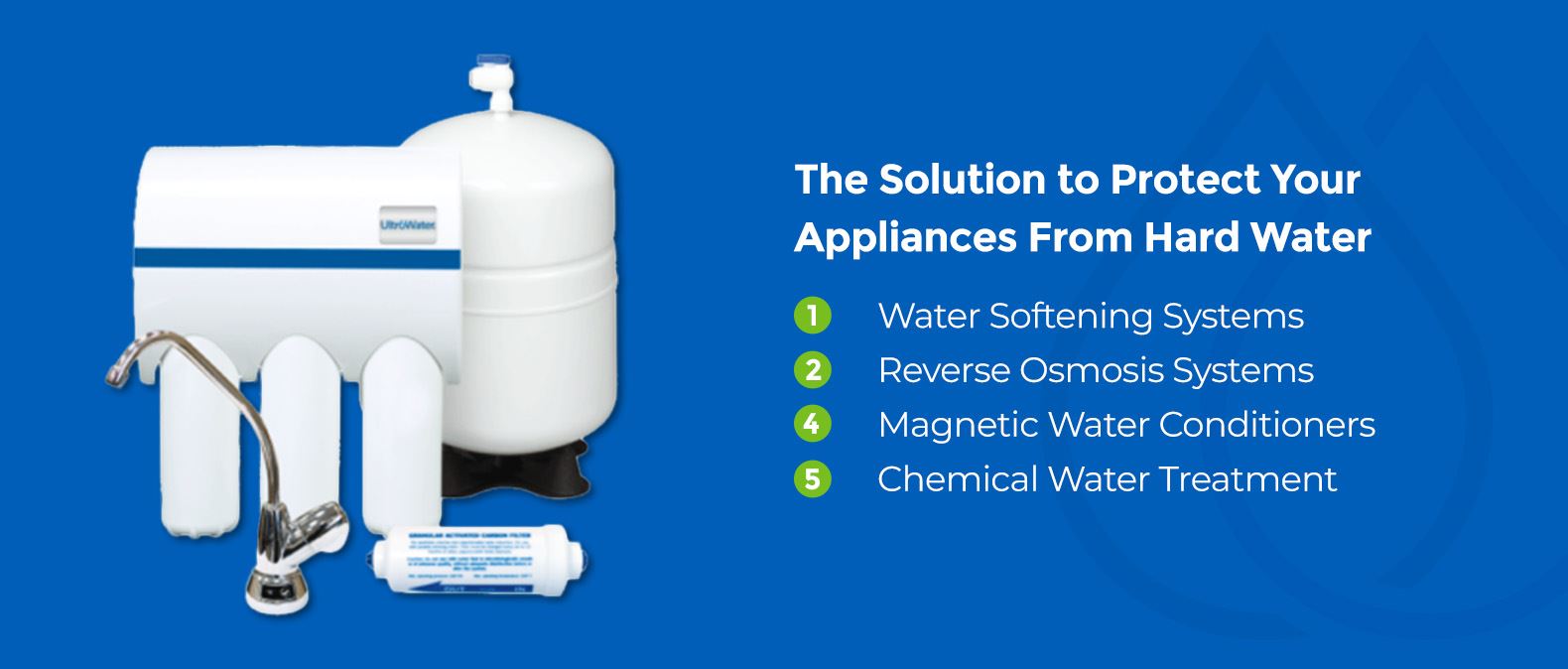
1. Water softening systems
The most effective and most common solution. Softeners remove calcium and magnesium through ion exchange, using resin beads that capture the hardness minerals and release sodium or potassium in their place.
2. Reverse osmosis
RO forces water through a semi-permeable membrane, removing minerals along with a wide range of other contaminants. Highly effective, and best deployed at the point of use for drinking water rather than whole-house hardness control.
3. Magnetic water conditioners
These devices claim to alter the behaviour of hardness minerals using a magnetic field, so scale doesn’t deposit. They are marketed as a cheaper alternative to ion exchange.
We don’t recommend them. After more than 30 years treating Northern Nevada water, we have not seen magnetic conditioners deliver reliable results on hardness at the levels we deal with here. If you want scale gone, remove the minerals.
4. Chemical treatment
Adding sequestering chemicals can keep minerals in solution so they don’t deposit. It works in specific applications, but it isn’t suitable for every plumbing system and it doesn’t address the underlying hardness.
Get It Tested First
Some of these approaches only work in particular situations, which is why testing comes before choosing equipment. Request a free water test and we’ll measure your mineral content and tell you what will actually solve it.