
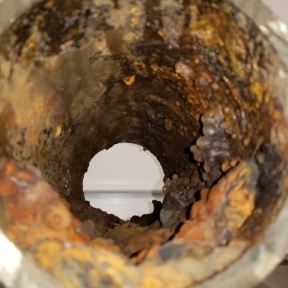
Roughly 85% of US water is hard, so odds are your neighborhood receives it. You can drink hard water safely, but the excess minerals affect taste and smell, and they cause real damage to water heaters and plumbing. Tankless units are particularly vulnerable.
What Is Water Hardness?
Hard water contains high levels of calcium and magnesium, picked up as water passes through rock before reaching the supply. How hard your water is depends on the geology of the region it came from.
Will Tankless Water Heaters Work With Hard Water?
Yes, but not as well as they should, and hard water voids most manufacturers’ warranties.
Hard water leads to clogs and scale in tankless heaters. The technology makes them more efficient than traditional tank heaters, but a tankless unit doesn’t have the same sediment tolerance a tank does, which makes it more exposed to the minerals in your water.
How Hard Water Damages a Water Heater
Lowered efficiency
Scale deposits form an insulating layer on the heating element and heat exchanger surfaces. That layer prevents heat transferring efficiently into the water, so the unit works harder and longer to reach the same temperature, and your energy costs rise accordingly.
Hard water also makes soap and shampoo harder to rinse, so you use more water showering and washing. That adds to both bills.
Increased maintenance
Hardness means continuous limescale formation, so the unit needs flushing more often than it would on soft water. Skipping that maintenance leads to expensive failures. Most manufacturers suggest flushing annually, but on hard water you can expect to do it two to three times a year depending on your mineral levels.
Reduced lifespan
A water heater is an expensive investment and should last its full service life. On hard water it often doesn’t. Scale buildup, longer heating cycles, and more frequent repairs all shorten it, and the repair costs add up alongside.
Noise
Rumbling or squealing from a water heater is usually mineral accumulation inside the system. It’s a sign the unit isn’t functioning properly and needs attention.
Testing Your Water Hardness
- Home test kit: available at pool, aquarium, and hardware stores. A strip changes color according to hardness.
- Professional assessment: a specialist can test on site and send a sample to a laboratory.
- Independent lab: send a sample and receive a full report.
- Municipal water quality report: your utility publishes hardness figures for the supply.
The most useful of these is a professional assessment, because it tells you not just how hard the water is but why, and what will actually fix it. Ask for a free in-home consultation and water test.
Protecting Your Water Heater
If your supply is hard, the only real answer is treating the water before it reaches the heater. But test first. If your water is already reasonably balanced, you don’t need a softener.
Magnetic water treatment
These devices create a magnetic field intended to alter scale-forming particles so they don’t deposit on the heater’s internal surfaces. After 30 years in business, we do not recommend magnetic water treatment systems for hard water.
Whole-home water treatment
Installed ahead of the water heater, a treatment system removes hardness minerals before water reaches the unit, so scale never forms. Modern systems also remove a range of other contaminants.
Talk to Us
If you’re seeing signs of hard water, protecting the heater starts with knowing what’s in your supply. Book a free consultation and we’ll test it and tell you what your options actually are.