
Water quality directly affects your health, your home, and your daily routine. Washoe County’s municipal supply meets regulatory standards, but meeting a standard and arriving at your tap in good condition are two different things, and what reaches your house can still carry minerals, sediment, or contaminants that affect taste and performance.
Local geology is the reason. Reno’s supply blends Truckee River water with over 100 public wells, and Nevada’s arid landscape naturally produces arsenic and other heavy metals in groundwater. Hardness across the region runs high: Fernley around 15 grains, Dayton around 13.
Whether you’re on city water or a private well, here are five things that actually move the needle.
1. Install Whole-House Filtration
A whole-house system treats water as it enters the building, so every tap benefits, drinking, cooking, bathing, and laundry. Depending on configuration these target sediment, chlorine, heavy metals, and microorganisms.
The advantage over point-of-use filters is coverage: a fridge filter or pitcher only helps the water you drink, not the water your appliances and skin see.
2. Soften Hard Water
Washoe County water is hard. It isn’t a health hazard, but it drives scale in pipes and appliances, dry skin and hair, and higher soap and energy use.
A softener removes calcium and magnesium through ion exchange, swapping them for sodium or potassium. Worth knowing: not everyone likes the feel of fully softened water. Some people love it, some find it slippery. A good installer sizes and configures for your preference rather than assuming.
3. Test Your Water: Repeatedly
Contaminant levels shift over time with environmental conditions and infrastructure changes, so a single test is a snapshot rather than an answer. This matters more on a private well, where nobody is testing on your behalf.
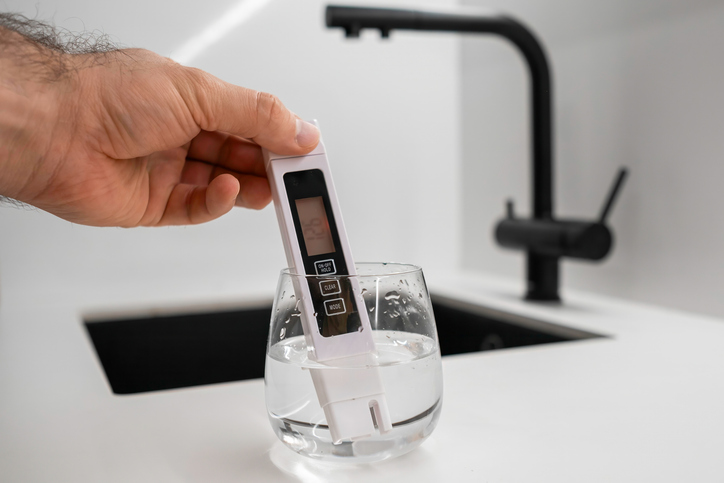
Home kits exist and are useful for screening. A professional analysis gives you the detail needed to actually specify equipment.
4. Maintain Your Plumbing
Your pipes affect your water. Old or corroded plumbing can introduce lead, rust, and other contaminants after the utility has done everything right.
If you’re in an older home, an inspection is worthwhile. Replacing aging pipe with copper or PEX removes a contamination source that no filter upstream can address.
5. Upgrade Drinking Water Filtration
For drinking water specifically, reverse osmosis or a quality carbon system removes a much wider range of contaminants, lead, chlorine, arsenic, and more.
RO forces water through a semipermeable membrane that traps particles carbon alone won’t catch. Given the arsenic levels in local groundwater, this is the step that matters most for well owners in this county.
Start With a Test
Every one of these steps works better when you know what you’re treating. Book a free water test or call (775) 324-2001.