
Nevada state law does not require private well users to test their water for contaminants or bacteria. The burden is on the owner. We have installed thousands of sanitation systems on private wells, and contaminated wells often test positive seasonally with heavy rains.
If you rely on well water for drinking, cooking, and cleaning, finding out it has tested positive for coliform is concerning. The good news is that testing, disinfection, and prevention will resolve it.
Types of Coliform Found in Northern Nevada
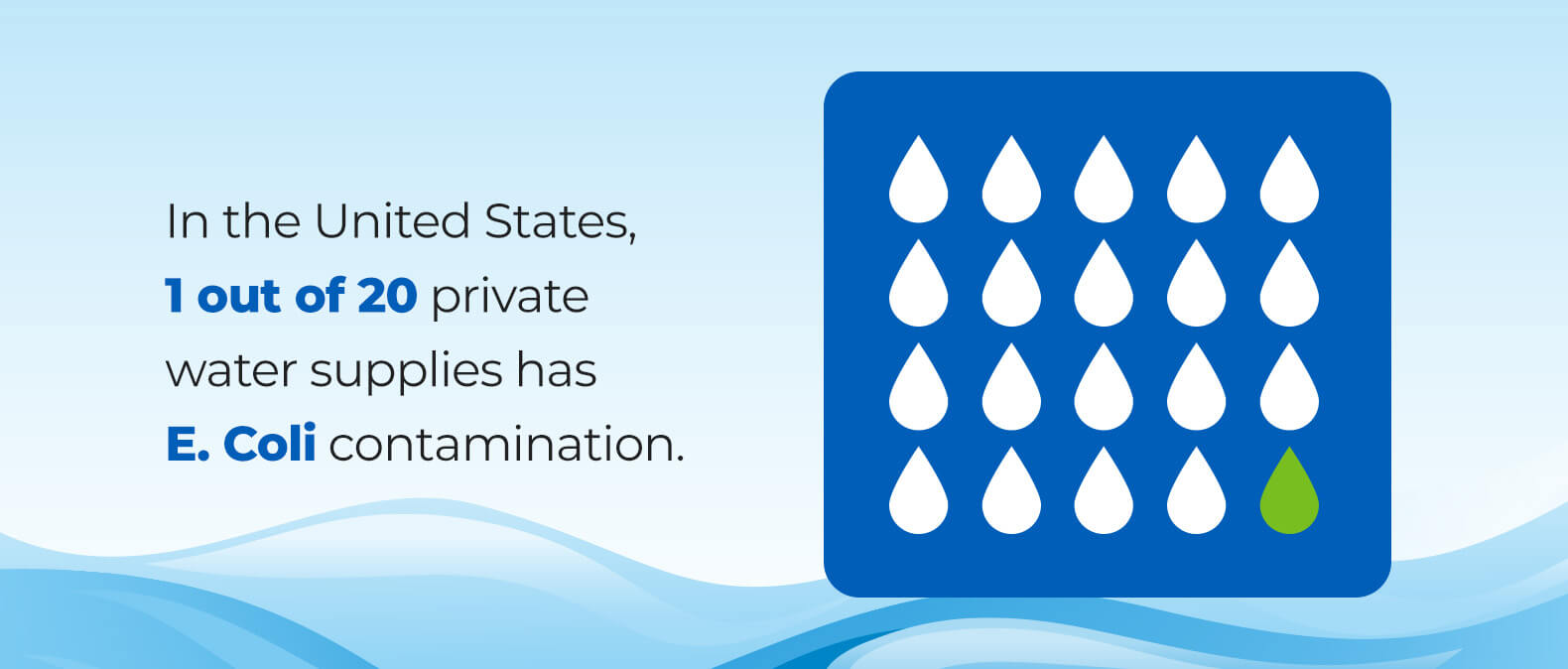
In the United States, roughly 1 in 20 private water supplies has E. coli contamination. According to the Nevada Division of Environmental Protection, coliform bacteria is one of the state’s most commonly detected contaminants in private well water.
- Total coliform: Found throughout the environment, soil, vegetation, animal waste. Not necessarily harmful itself, but its presence indicates the water may be contaminated with other harmful bacteria or viruses.
- Fecal coliform: A subgroup of total coliform found specifically in animal and human feces, so it is more likely near septic tanks or livestock. Less common than total coliform and should never be ignored.
- E. coli: Found in the intestines of humans and animals, and the most harmful of the coliform types. If E. coli is detected, stop all use immediately and begin addressing the source.
Where Coliform Comes From
- Animal waste from nearby livestock or wildlife
- Human sewage from leaking or failing septic systems
- Surface water where a well sits near rivers, lakes, or ponds that seasonally flood
- Soil around the well, washed in by heavy rainfall or flooding
- Dead rodents that burrow into the well and drown
Risk varies with location, geology, well construction, and land use. Areas with higher agricultural or livestock activity see more contamination from runoff, and areas dense with septic systems carry greater risk.
How Weather Patterns Affect Your Well
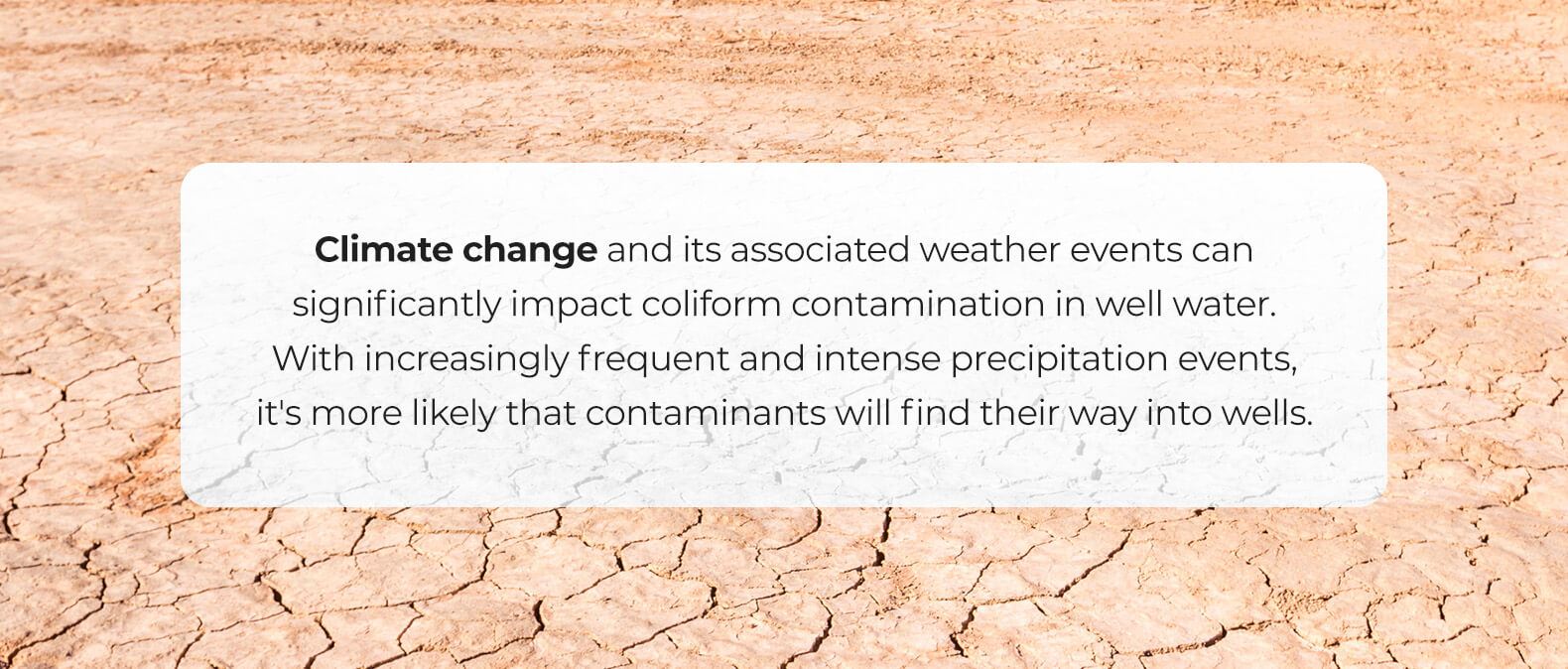
More frequent and intense precipitation makes it more likely contaminants find their way into wells. Northern Nevada also experiences longer and more intense droughts, and as water levels in wells drop it becomes easier for contaminants to reach the supply.
That makes regular testing especially important during drought and after heavy precipitation. Working with a local company matters here, familiarity with regional conditions means more accurate testing, better understanding of which contaminants are prevalent, tailored treatment, and faster response to an unexpected contamination event.
What Are the Risks?
Not all coliform bacteria are harmful to humans. But their presence indicates possible contamination with harmful bacteria or viruses, E. coli in particular. Consuming contaminated water can cause nausea and vomiting, diarrhea, abdominal cramping, fever, and dehydration.
Exposure especially affects young children, older adults, and anyone with a weakened immune system. Seek medical attention if you knowingly consume contaminated water.
How to Know if Your Well Is Contaminated
The only way to know is laboratory testing. Test at least once a year for coliform bacteria, and additionally if you notice any change in taste, color, or odor, or after a flood, earthquake, or other natural disaster.
One telltale sign is people in the household getting sick after using the water. If you suspect contamination, have it tested rather than guessing.
Finding the Source
If your water tests positive, identify the source, otherwise contamination will simply recur. Possible sources include animal waste, human sewage, faulty or damaged septic systems, nearby livestock operations, and agricultural runoff.
A professional well inspector can conduct detailed inspection and testing and recommend how to address it.
Disinfecting Your Well
If you choose to disinfect the well yourself:
- Gather supplies: a chlorine bleach solution rated safe for drinking water, a clean bucket, a garden hose, and rubber gloves.
- Turn off power to the well so the pump isn’t running during the process.
- Remove debris or sediment by flushing the well with clean water.
- Mix the chlorine solution following the product label for the correct ratio.
- Pour the solution into the well casing carefully, using the bucket.
- Circulate the solution: turn on the faucet closest to the well and let it run until you can smell chlorine, which indicates the solution has reached throughout the well and plumbing.
- Let it sit in the well and plumbing for at least 12–24 hours, avoiding all water use during that time.
- Flush the system thoroughly with clean water afterward.
- Test the water to confirm it is coliform-free.
If you’re not comfortable doing this yourself, hire a professional. Getting it wrong means either an ineffective disinfection or an over-chlorinated well.
Installing a Water Treatment System
After disinfecting, install a water treatment system to remove any remaining bacteria. If coliform levels are particularly high, consider a system using chemical disinfectants or ultraviolet disinfection.
Testing Regularly and Preventing Recurrence
- Inspect your well: check the cap or seal regularly for cracks or damage, and keep the surrounding area free of animal waste and chemicals.
- Maintain your septic system: pump the tank regularly and dispose of household chemicals properly.
- Use proper well construction: site new wells well away from contamination sources, with proper casing and a secure seal.
- Practice safe water handling: keep garden hoses and anything that has contacted animal waste away from the well head.
Contact us to schedule a well water test.